DesiMati · Fresh produce · Mobile commerce and operations
Following a produce order from cart to dispatch
I designed the mobile shopping journey for customers in tier 2 and 3 cities and the tools behind fulfilment. Two weeks with workers and floor managers in Jabalpur informed the operations work, from receiving stock to assigning and dispatching an order.
- Project duration
- 6 months
- Tools
- Figma, Google Forms and Midjourney
- My role
- Product Designer
- Designed for
- Produce shoppers, warehouse staff and floor managers
The brief
I started with a question about buying fresh produce in tier 2 and tier 3 cities, particularly for tier 3 shoppers. If someone wants tomatoes for tomorrow, what do they need to know before ordering on a phone? They need to recognise the item, understand how much they are buying, see the price for that pack and know where it will be delivered.
The same order looks different on the warehouse floor. A kilogram promised to the shopper has to come from produce that passes a quality check. My scope eventually covered the mobile shopping experience, the direct-to-consumer website and the internal tools for purchasing, inventory, packing and dispatch. I was the solo designer on inventory operations.
Discover and define
I used the Double Diamond to organise the work. On the consumer side, I framed the problem around everyday buying decisions. “Two packs” only means something if the shopper can see the weight of each pack. Choosing an address matters while browsing because it establishes the delivery context. I used those questions to decide which information belonged beside a product and which could wait until order review.
For operations, I spent two weeks in Jabalpur studying the routines of workers and floor managers. I followed the responsibilities involved in receiving stock, allocating work and preparing dispatches. A floor manager needed to distinguish an assigned order from one ready to leave. A purchaser needed to distinguish everything physically present from the portion still fit to sell. Those distinctions became states in the internal system.
From a design language to a shopping journey
One of my first hands-on steps was to establish the design language. I defined typography, colour hierarchy and recurring controls before composing full pages. I then mapped six connected areas: home, product details, wishlist, orders, profile and the order process. The map specified how people moved between them and which information had to follow them.
For example, adding tomatoes from a category listing changes the shopper’s order while they are still browsing. The quantity needs to remain visible there, the cart needs to reflect it, and opening the product detail should still make the pack size clear. Mapping that interaction helped me treat each screen as part of one purchase.
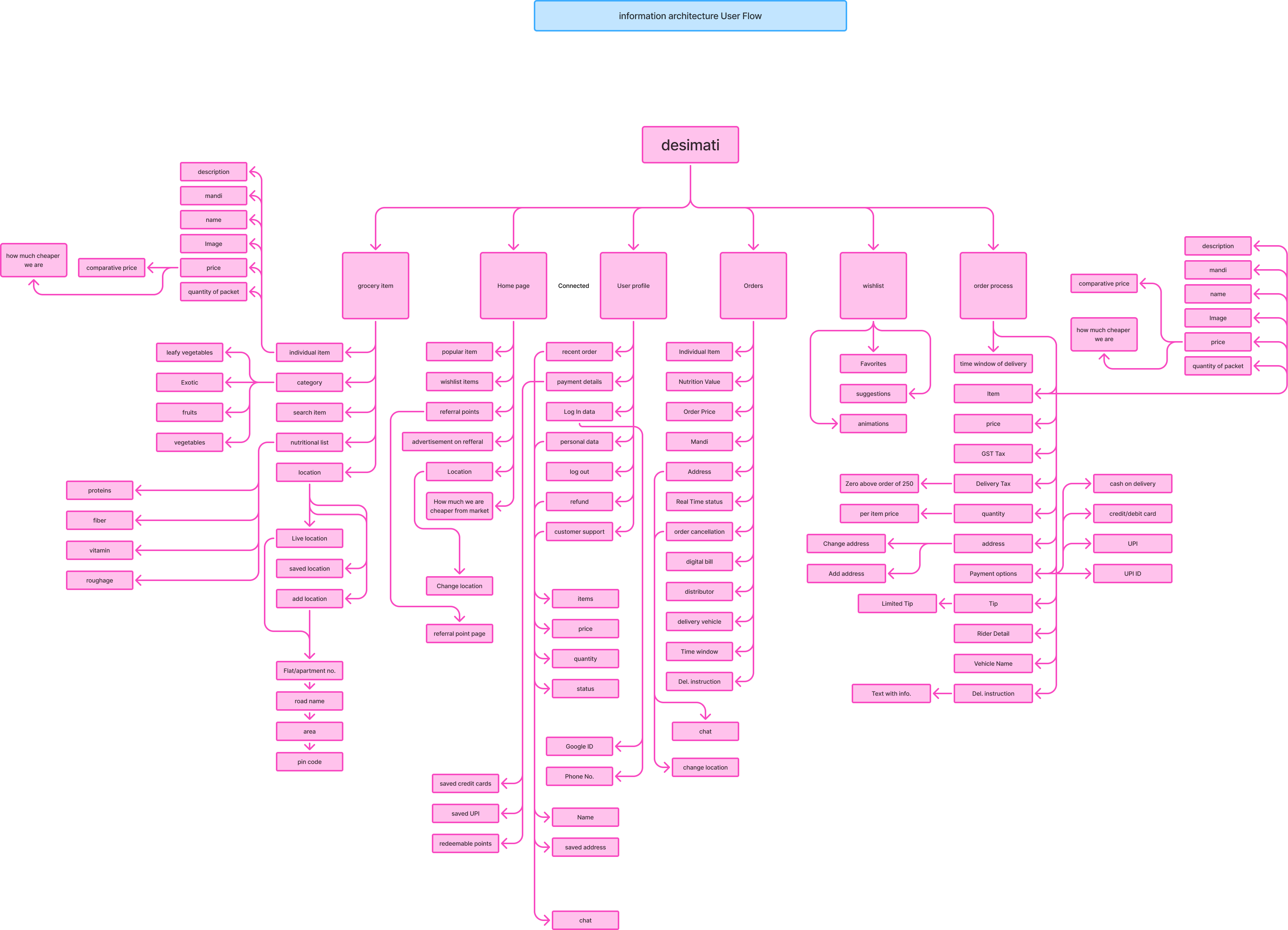 Open the full journey map
Develop, compare and refine
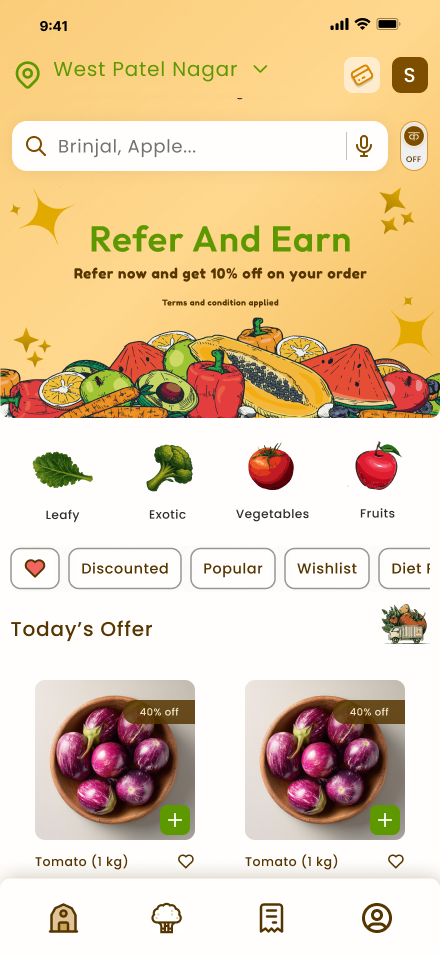
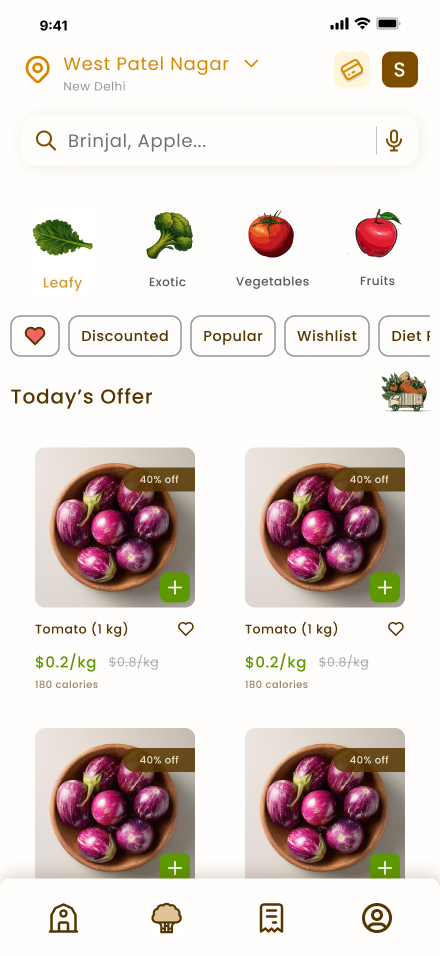
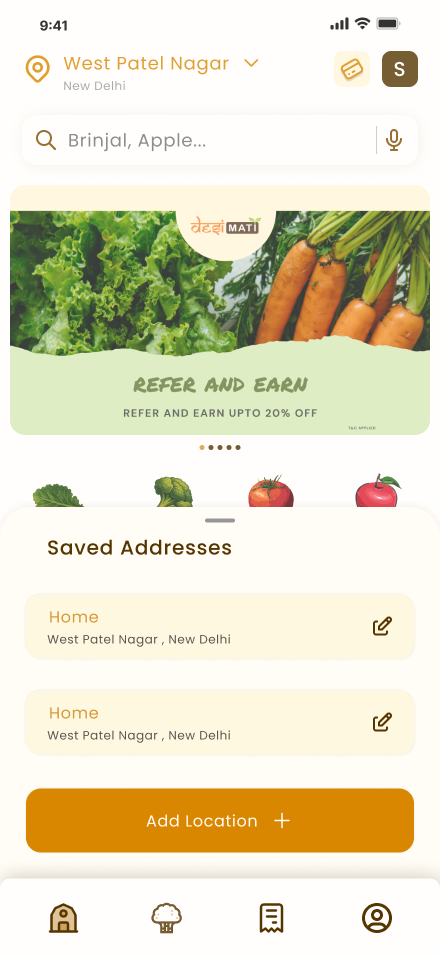
I sketched low-fidelity wireframes and worked through multiple layouts in Figma. I explored how much space to give promotions, category shortcuts, filters and the product grid. I also designed ways to use a current location, enter an address manually or select a saved one. These alternatives gave shoppers different entry points into the same catalogue.
The product card became the unit around which I organised the experience. A shared layout kept the item and buying unit recognisable across categories. Selecting Add exposed a quantity control, and a persistent cart entry let shoppers review their choices without losing their place. Product details carried the fuller description and nutrition information. My aim was for a returning shopper to recognise the interaction on the next visit. Retention was a design goal.
The next DesiMati app
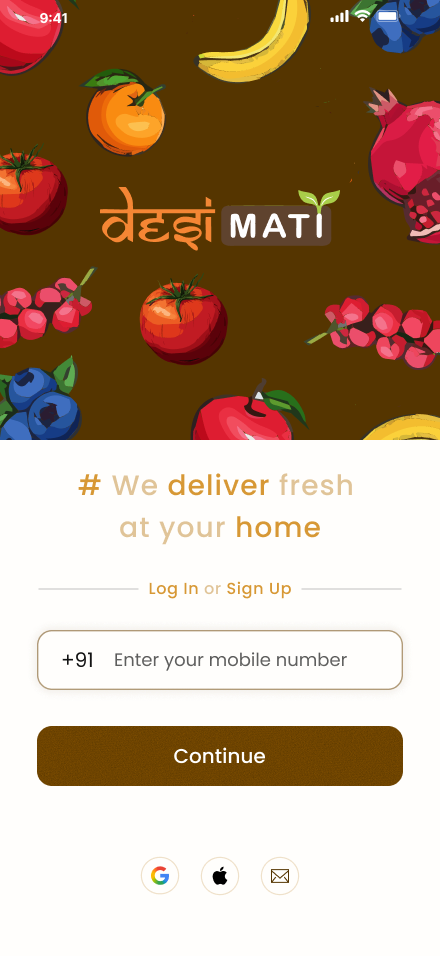
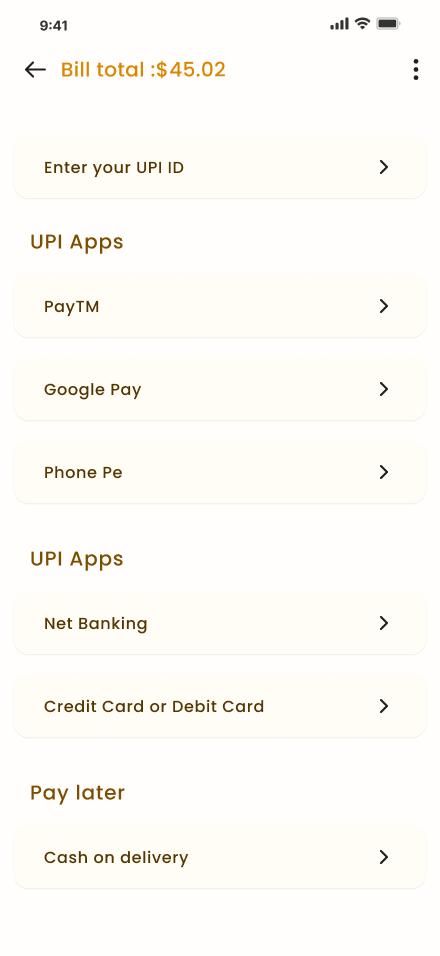
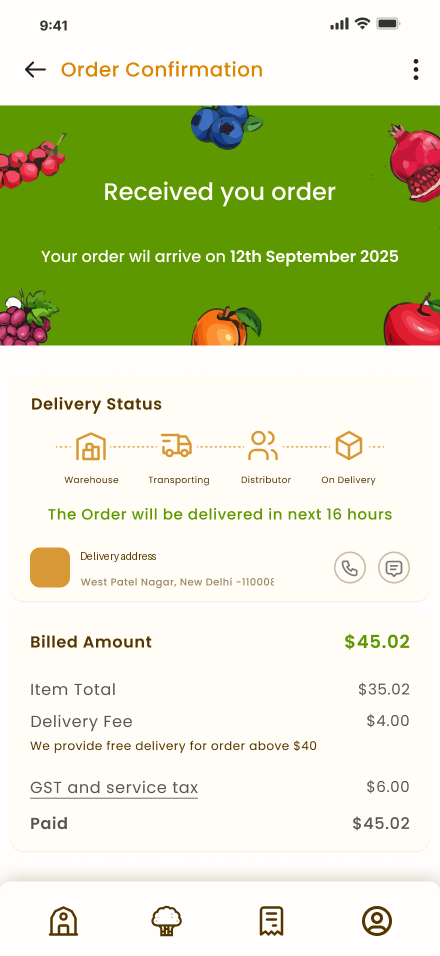
My final layout explorations show how shoppers enter the app and browse produce. The address, payment and confirmation screens show how they complete an order.
Turning produce quality into a purchasing decision
I designed the admin workflow around three questions. How much good stock is left? How much will we need? Given the quality of recent deliveries, how much should we buy to cover the difference? Historical purchases and quality records informed demand and loss estimates. The admin could consider expected market price and purchase cost alongside those quantities.
Take a delivery of 20 kg of tomatoes. We supply 10 kg, set aside 5 kg that failed the quality check and carry 5 kg of good tomatoes into tomorrow. The three quantities account for the full delivery. Of the 20 kg received, 15 kg were usable, giving this batch a 75% usable share and a 25% loss by weight.
If tomorrow’s demand is 20 kg, we need another 15 kg of usable tomatoes. Assuming the next delivery has the same 75% usable share, buying 15 kg would yield only 11.25 kg. Dividing the 15 kg shortfall by 0.75 gives a 20 kg estimated purchase. If the stock on hand already covers demand, the quantity needed falls to zero. The illustration assumes the remaining 5 kg will still be fit to sell tomorrow.
An illustrative estimate using the batch below. Move either slider to see how the purchase changes with demand or quality.
- Usable stock on hand
- 5 kg
- Usable stock still needed
- 15 kg
- Estimated purchase
- 20 kg
Quality also changes how a price should be read. At an illustrative ₹30 per kg, a 20 kg delivery costs ₹600. With 15 kg usable, the effective purchase cost is ₹40 per usable kg, before packing and delivery. This is why I included both cost and quality in the purchasing view. A low quoted price can still make an expensive batch.
These examples express the decision rule I designed for. Actual demand, future prices and the next batch’s quality remain estimates. A single delivery supplies a useful example of the arithmetic but offers limited evidence for forecasting the next one.
Assigning the work and closing the books
After purchasing, the unit of work changes from a batch to a packing assignment. I designed a way for a manager to assign an employee a produce item, a pack size and a required quantity. The scan and quality check provided two distinct pieces of information: how much had been handled and how much met the order requirement.
For example, an assignment for ten 500 g packs calls for 5 kg of acceptable produce. If nine packs pass and one is set aside, the assignment is one acceptable pack short even though ten packs were handled. Keeping the target, scanned quantity and quality result visible gives the manager a basis for assigning the remaining work.
The wider internal system also covered market-price planning, billing and structured audits. In the tomato example, the purchase record accounts for 20 kg and the dispatch record accounts for 10 kg. Recording 5 kg as rejected explains why only 5 kg remains available. Those records let the business reconcile a purchase with what was supplied, lost and carried forward.
Delivery, outcomes and what I learned
I took the Figma layouts and component states into development to understand their implementation limits. Handoff meant specifying what happens after a tap or scan: how Add becomes a quantity control, how an address carries into review and which state lets a packing task move forward. Working through those transitions taught me more about consistency than aligning a set of finished screens.
Internal tracking indicated approximately 40% faster processing in the operations work. The record available for this case study does not identify the timed task, baseline or measurement window, so I treat it as a directional team result. The customer-side deliverable was a connected shopping journey and a reusable set of interface patterns. I don’t have a measured retention result for the app.
This was one of my first applications. The lesson I carried forward was to follow a quantity all the way through a product. A shopper sees two packs, a packer sees a target weight, and a purchaser sees the usable yield needed to fulfil it. Each person needs a different view of the same commitment.